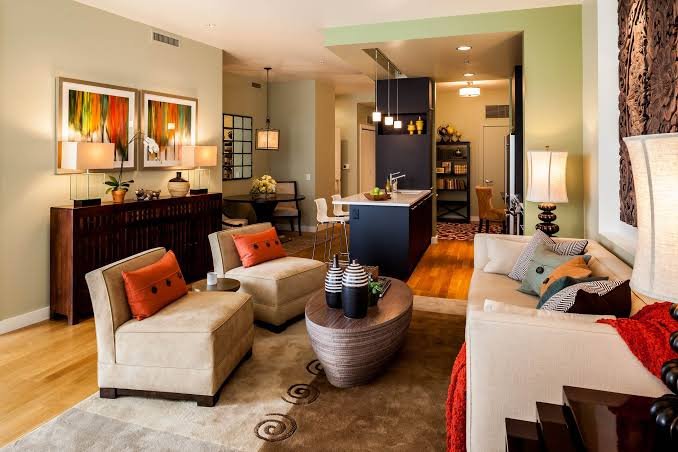
Open-plan spaces look great in photos, but in real life they can feel a bit like everything is floating unless you anchor different zones. A rug is one of the easiest tools for that.
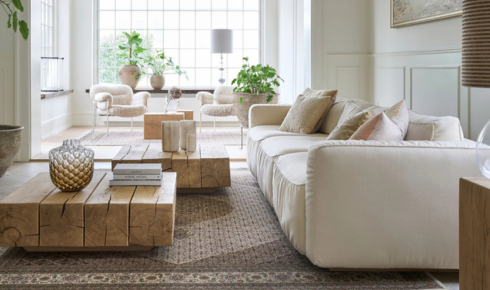
Under a sofa and coffee table, a rug quietly says, “This is the sitting area.” Around a dining table, another rug can mark, “Here’s where we eat.” Even if there are no walls between these zones, your eye reads them as separate, more organised areas.
It also helps with furniture placement. Instead of pieces drifting apart, everything sits on or around the rug, which makes the room feel intentional rather than random.
Practical side bonus: rugs soften echo in large open spaces and make them feel less “hall-like”. They also add comfort underfoot, especially on hard flooring.
You don’t need anything too bold. Even a simple, textured rug in a neutral tone can do the zoning job very well, as long as it’s big enough to relate to the furniture sitting on it.