Pool Maintenance Tips for Cleaner, Healthier Arizona Pools
Owning a swimming pool in Arizona offers a convenient way to cool down, exercise, and enjoy time outdoors. However, intense sunlight, high temperatures, dust, debris, evaporation, and frequent swimming can quickly affect water quality and equipment performance. Consistent pool maintenance helps keep these issues under control while supporting a cleaner, safer, and more enjoyable swimming environment.
For homeowners in Gilbert, Mesa, Chandler, and surrounding East Valley communities, professional pool care can make it easier to keep a swimming pool ready throughout the year. Valley Pools provides professional care that goes beyond removing leaves from the water, with services focused on water testing, chemical balancing, surface cleaning, equipment inspections, and identifying potential problems before they become more serious.
Why Pool Maintenance Matters in Arizona
Arizona’s desert climate creates unique challenges for residential swimming pools. Strong sunlight can affect water chemistry, while hot weather can increase evaporation. Wind can also carry dust, dirt, leaves, and other debris into the pool.
Without regular attention, these conditions can contribute to cloudy water, algae growth, chemical imbalances, clogged filters, and circulation problems. Over time, neglected maintenance may also place unnecessary stress on pumps, filters, heaters, and other components.
A consistent maintenance schedule helps prevent these problems from becoming more difficult to manage. Routine service keeps water chemistry within appropriate ranges and gives technicians an opportunity to identify unusual changes in equipment performance.
Professional pool care can therefore serve as both a cleaning routine and a preventive approach to long-term pool ownership.
What Should Professional Pool Maintenance Include?
Effective pool care requires attention to several interconnected areas. Cleaning the water alone is not enough if filtration, circulation, or chemical balance is being overlooked.
A comprehensive service routine may include:
- Testing pool water
- Balancing chemicals
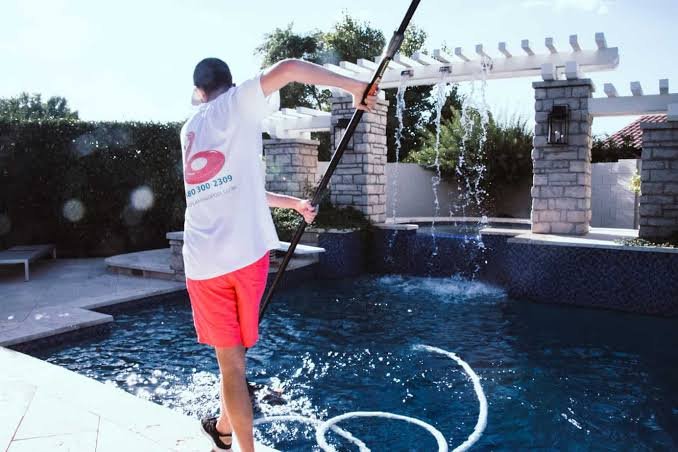
- Skimming surface debris
- Brushing walls, steps, and tile
- Vacuuming the pool floor
- Emptying skimmer and pump baskets
- Checking filters and circulation
- Inspecting pumps and other equipment
- Looking for leaks or unusual equipment behavior
- Monitoring overall water clarity
Each task contributes to the condition of the pool. Balanced water supports the pool’s surfaces and equipment, while clean baskets and filters help maintain proper circulation. Regular brushing and vacuuming remove buildup that may otherwise become harder to eliminate.
The goal is to maintain the pool consistently instead of waiting until a visible problem requires immediate attention.
Water Chemistry Is a Key Part of Pool Care
Water chemistry plays an important role in maintaining a healthy swimming environment. When chemical levels are not properly balanced, the effects can extend beyond cloudy or unpleasant-looking water.
Improper chemistry may contribute to algae growth, scale, staining, corrosion, or irritation. It can also affect equipment and pool surfaces when unfavorable conditions persist.
Regular water testing helps identify changes before they become significant. Depending on the pool and its equipment, service professionals may monitor factors such as sanitizer levels, pH, alkalinity, and other relevant chemical conditions.
Arizona’s heat and sunlight can make consistent monitoring especially important. Evaporation can change the concentration of chemicals in the remaining water, while heavy pool use can introduce additional contaminants.
Rather than relying only on the appearance of the water, regular testing provides a more reliable picture of what is happening inside the pool.
Cleaning Goes Beyond Skimming the Surface
Surface skimming is one of the most recognizable pool-cleaning tasks, but it represents only one part of proper care.
Dust and debris can settle on walls, steps, corners, and the pool floor. If left untouched, this material can contribute to buildup and create conditions that make the pool more difficult to maintain.
Brushing helps loosen material from surfaces, while vacuuming removes debris that has settled below the waterline. Tile lines may also require attention because oils, minerals, and other deposits can accumulate in these areas.
Consistent cleaning keeps the pool looking better while reducing the amount of debris that enters the filtration system.
For pools exposed to Arizona’s dusty outdoor environment, regular cleaning can be particularly valuable. Keeping debris under control helps reduce unnecessary strain on the filtration and circulation system.
Pool Equipment Deserves Regular Attention
A pool can look clean while its equipment is beginning to experience problems. Pumps, filters, heaters, salt systems, automation components, and circulation equipment all contribute to reliable pool operation.
Changes in water flow, unusual sounds, pressure fluctuations, leaks, or inconsistent equipment operation may indicate an issue that deserves professional attention.
Routine equipment inspections can help identify these warning signs earlier. Early attention may prevent a minor concern from developing into a larger repair or an unexpected interruption in pool use.
Professional pool service can also help homeowners understand when equipment needs repair, replacement, or additional inspection. Valley Pool Service provides equipment-related services designed to address different residential pool needs.
Simple Pool Care Habits for Homeowners
Professional service provides an important foundation, but homeowners can also take practical steps between scheduled visits.
1. Check the Pool Regularly
Take a few minutes to look at the water and surrounding area. Changes in clarity, color, surface condition, or debris levels can provide useful clues about the pool’s condition.
Visible algae, unusual cloudiness, or significant debris should receive prompt attention rather than being left for an extended period.
2. Remove Visible Debris
Leaves, insects, dust, and other debris can accumulate quickly, particularly after windy weather. Removing larger debris from the surface can help reduce the amount of material entering the filtration system.
3. Watch for Equipment Changes
Pay attention to unusual noises, leaks, reduced water flow, or changes in pump operation. A small change may be easier to address before it develops into a complete equipment failure.
4. Keep the Area Around the Pool Clean
Pool surroundings can affect water quality. Dirt, leaves, grass clippings, and other outdoor debris can be carried into the water by wind or foot traffic.
Keeping nearby areas reasonably clean can reduce the amount of unwanted material entering the pool.
5. Follow a Consistent Service Schedule
Inconsistent cleaning can make pool care more challenging. A regular schedule provides opportunities for water testing, cleaning, equipment observation, and preventive attention.
How Preventive Pool Care Helps Avoid Bigger Problems
Preventive maintenance is valuable because many pool problems develop gradually. Water may become increasingly cloudy before the issue becomes obvious. A pump may begin operating differently before it stops working. A filter may gradually become less effective as debris accumulates.
Regular professional visits provide opportunities to notice these changes.
For example, unusual water pressure can potentially indicate a filtration concern. Reduced circulation may point toward a pump or plumbing issue. Persistent chemical imbalance may indicate that the pool requires closer evaluation rather than simply another chemical adjustment.
Identifying these signs early can help homeowners make informed decisions about repairs and service.
When Professional Pool Service Is a Smart Choice
Some homeowners have enough time and experience to manage many routine pool-care tasks themselves. Others prefer professional service because of busy schedules, travel, property management responsibilities, or the desire for consistent results.
Professional service can be especially useful for homeowners who want routine cleaning and chemical monitoring handled on a predictable schedule.
Valley Pool Service serves homeowners in Gilbert, Mesa, Chandler, and nearby East Valley communities. Its services include routine pool cleaning and maintenance as well as equipment repair, equipment installation, acid washing, and tile cleaning.
A professional technician can also provide another valuable benefit: familiarity with the pool. Seeing the same system regularly makes it easier to recognize changes in water condition, equipment behavior, and overall performance.
Seasonal Considerations for Arizona Pools
Although Arizona experiences warmer weather than many other parts of the country, pool care still benefits from seasonal awareness.
During periods of extreme heat, evaporation may occur more rapidly. Increased swimming activity can also introduce additional contaminants into the water. Windy periods may bring additional dust and debris.
Cooler months can bring different considerations, particularly for homeowners who use their pool less frequently. Even when swimming activity decreases, water chemistry, circulation, and equipment still require attention.
A consistent maintenance program helps prevent the assumption that a pool only needs service when it is being used frequently.
Choosing a Reliable Pool Service Provider
When comparing pool service providers, homeowners should look beyond basic cleaning. Consider whether the service includes water testing, chemical balancing, equipment checks, detailed cleaning, and communication about problems that require attention.
Experience with local environmental conditions can also be valuable. Arizona pools face specific challenges related to heat, sunlight, dust, and evaporation, making familiarity with the regional climate an important consideration.
Clear service documentation can provide additional peace of mind. Reports, photographs, and communication about completed work help homeowners understand the condition of the pool and what was addressed during a service visit.
Keep Pool Care Consistent Year-Round
A swimming pool should be more than visually clean. Proper water balance, reliable circulation, functional equipment, clean surfaces, and timely repairs all contribute to a better ownership experience.
Consistent pool maintenance can help Arizona homeowners stay ahead of common issues while protecting the condition and usability of their swimming pools. Regular cleaning removes debris, water testing helps identify chemical changes, and equipment inspections provide opportunities to catch developing concerns.
For homeowners in Gilbert, Mesa, Chandler, and nearby East Valley communities, Valley Pools offers professional pool care designed around the demands of local residential pools. A dependable maintenance routine can help keep the water clean, equipment functioning properly, and the pool prepared for everyday swimming.
A well-maintained pool is easier to enjoy when routine care becomes part of the property maintenance schedule. With professional attention and simple homeowner habits working together, Arizona pool owners can spend less time dealing with preventable problems and more time enjoying the water.